CES 2026: How the Future of Audio Advertising Is Built to Connect
Innovation, new technology, the brightest minds, solar-powered intergalactic cars; there’s really no better way to start the new year with a bit of inspiration than a week at CES (after you recover from whatever flu-like illness, of course).
Our role at CES, however, takes place slightly further down the strip in the Aria, past the five million branded LED signs and crowd of brand ambassadors, up the escalators, and to our audio oasis in the third-floor ballroom.
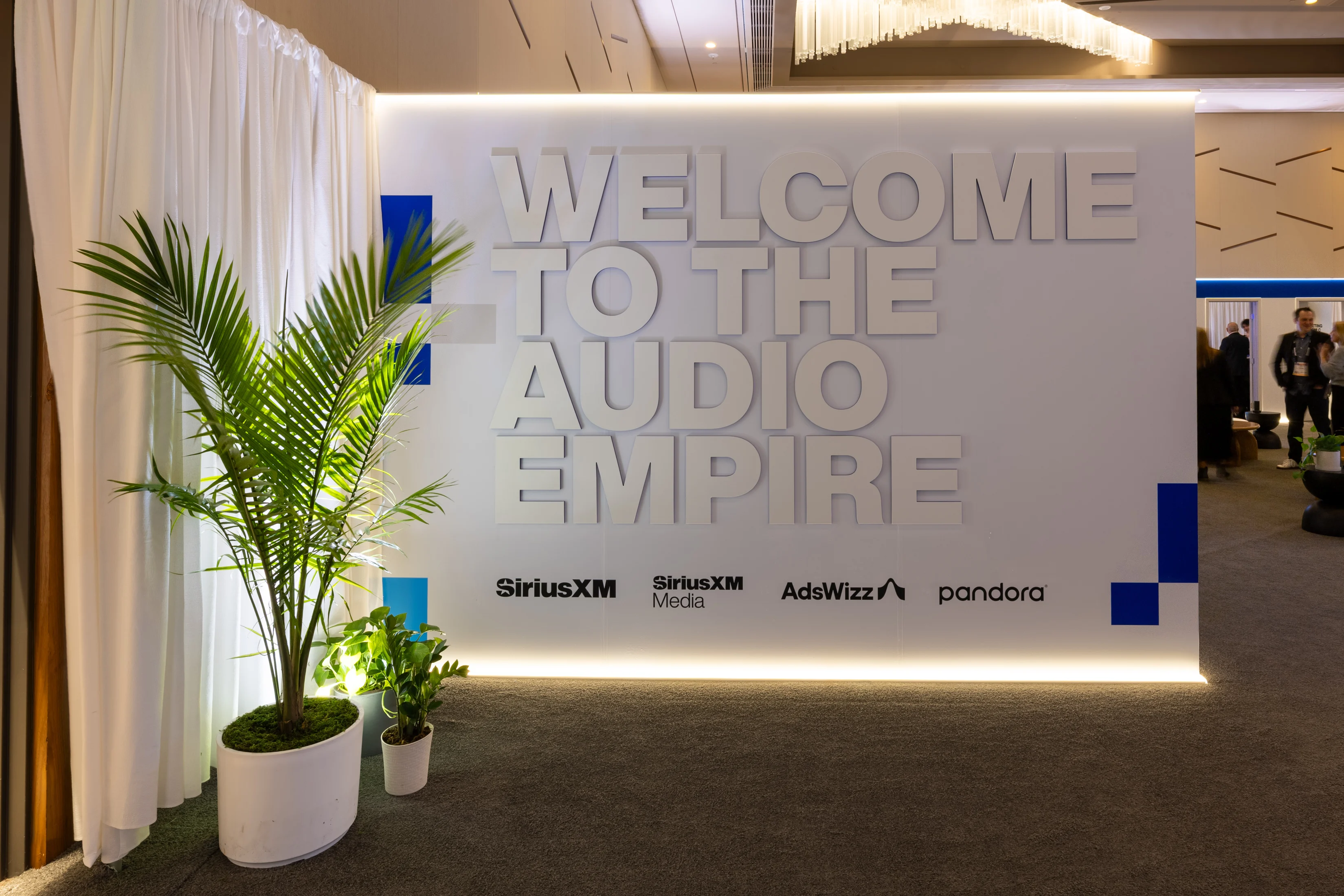
And while technology is making our lives easier, it can make capturing our audiences’ attention harder—oversaturated channels, inconsistent measurement, gaps in signal, and the list goes on. The real challenge facing every marketer, advertiser, creator, and brand leader is simple: What does it take to reach, resonate, and drive impact with consumers?
The answer: Connection. The brands that are ready to meet the future of advertising are those that understand that success is built on connection, across culture, technology, and human experiences.
It’s not often that a single medium can address all these concerns (and more). But audio does. And this year, we proved it. The audio advertising landscape has become so much more than what you might have once known it to be—it’s evolved to be the go-to digital format for a robust and future-proof media mix.
And leading the charge behind all this success? SiriusXM Media, of course. Let’s break down all the ways we showed up at CES to prove how we’re solving for the biggest media challenges in 2026—and beyond.
Driving the future of in-car connectivity
For as long as most marketers can remember, the car has been audio’s stronghold. After all, it’s where listening habits are deeply ingrained, whether it’s on the commute to work, running errands, or taking trips. Unfortunately, the native in-car experience has also traditionally been where advertisers have the least visibility—until now, that is.
The future of the connected car experience isn’t coming—it’s here. And as our EVP and COO, Wayne Thorsen, explained during his time in CES’ C-Space Studio, SiriusXM is leading the charge in this new evolution of smarter, more measurable audio advertising experiences.
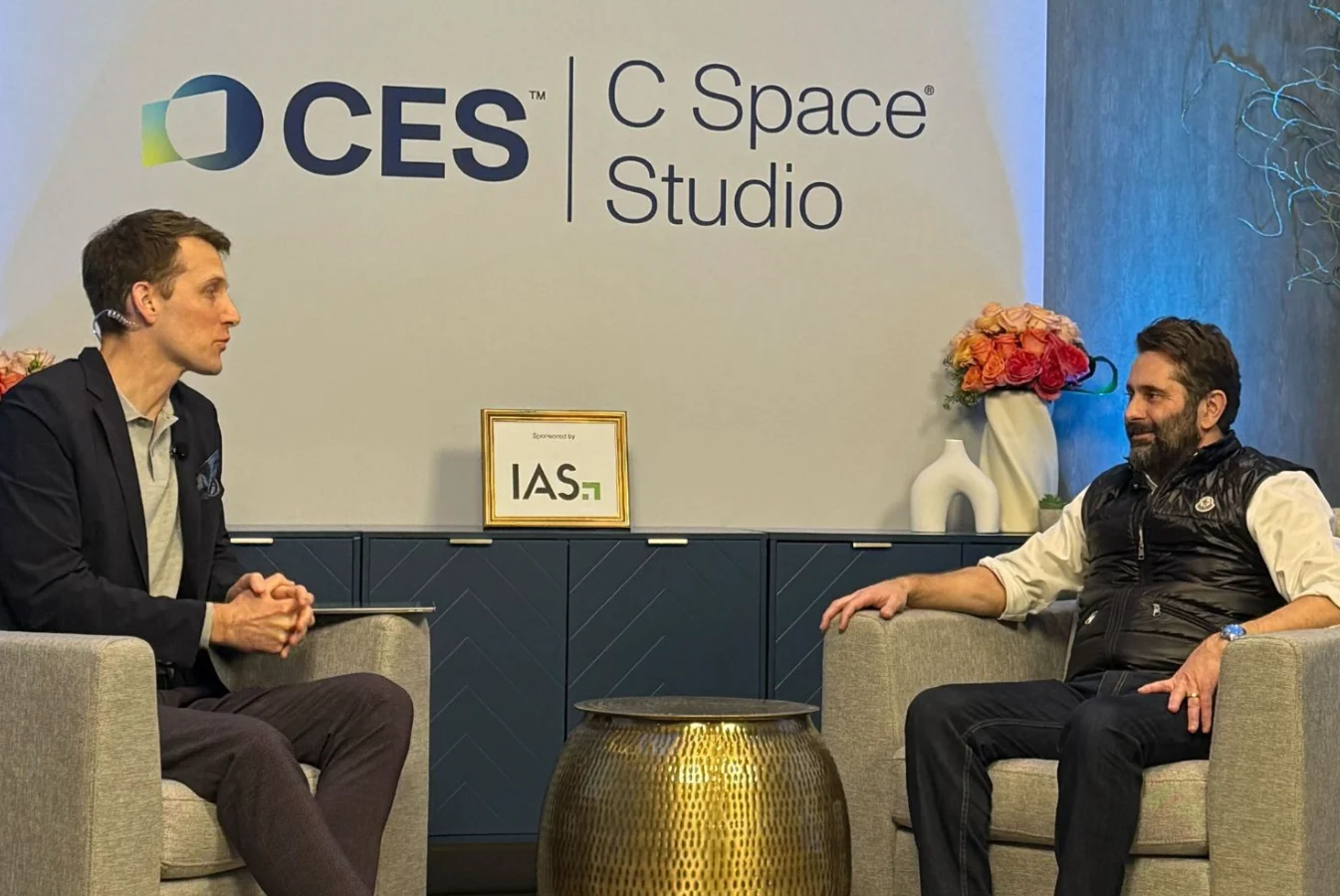
Let’s take a look at what that means in practice. We’re now able to capture real listening behavior across ad-supported satellite channels—an area that’s long been difficult to measure with true precision.
Using data from digitally connected, 360L-enabled vehicles, we can see how listeners actually tune in: what they’re listening to, when they’re listening, and how ads are delivered. We’ve transformed our identity framework to be centered around the listener, rather than the vehicle, allowing us to personalize listeners’ experience both in the car and in our app.
The result is clearer visibility into satellite consumption and a measurement approach that works hand-in-hand with digital ad logs from SiriusXM-equipped vehicles and the SiriusXM app. Together, it creates a single, more complete view of audio listening—across the car, mobile, and streaming—without treating any environment as an afterthought.
Mastering the art of measurement to prove audio's real impact
When it comes to how audio has traditionally been measured in MMMs, our SVP and Head of B2B Marketing, Lizzie Collins, said it best: “Only about 4% of ad dollars go to audio. And I know exactly why. Marketers will take terrestrial radio, streaming, podcasts, endorsements—all very different things—put them into one bucket and just call it ‘audio.’ Then they expect it to behave like display. But there’s no click. So the signal never arrives in the way they expect.”
We recognize that this misperception is largely due to what has previously been a gap in technology. But we also understand that when audio data becomes more precise and easier to work with, it finally earns its seat at the MMM table. That’s why we’ve set out to improve the quality and granularity of our data, to ensure audio is modeled with the same level of rigor as every other major media channel.
As we shared at CES, we’re proud to offer detailed, as-run reporting—by platform, placement, audience, and geography—so models can more accurately reflect how audio contributes to real business results. That added clarity reduces risk for advertisers and makes it easier to see where audio fits, and performs, across the broader media mix.
We also partner closely with leading measurement and analytics providers to translate digital audio delivery into formats that work seamlessly within MMMs. By working with platforms like Claritas, Podscribe, Magellan, and Innovid, we bring ad-server-level tracking and delivery data into a model-ready view of audio performance.
On top of that, tools like the AdsWizz AudioPixel connect audio exposure to real-world actions—whether that’s a site visit or an app download. The result is clearer attribution and a more precise understanding of how audio drives outcomes, not just awareness.
Putting privacy and data integrity at the forefront of audio's framework
You can’t have any conversations around tech and advertising without bumping into concerns around privacy and data signals. And for good reason: Today, listener signals are scattered across the ecosystem. Pandora and SoundCloud lean on logged-in data. Many streaming publishers rely on MAIDs. Podcasts often have little more than IP addresses and user-agent strings. The result? A system that makes it harder for advertisers to reach the same audience across platforms, plan with confidence, or measure performance in a consistent way.
But where other partners see problems, we see opportunities for innovation and improvement. That’s why SiriusXM Media—powered by AdsWizz—is saying goodbye to fragmentation, practices that give consumers pause, and compliance concerns. At CES, we shared how we’re building the industry’s first unified, privacy-forward identity framework designed specifically for digital audio.
Our solution makes it possible for advertisers to connect the dots across the entire listener journey. Our new infrastructure recognizes the same listener across platforms, measures outcomes more reliably, activates first-party CRM data at scale, and makes it easier for advertisers to move programmatic budgets into audio with confidence.
One of the key hallmarks of this initiative is our Podcast Consent Manager. Built into the Simplecast CMS, it gives listeners transparent control over ad-tracking preferences—effectively addressing one of podcasting’s most persistent privacy challenges head-on.
Our vertically integrated technology—from content creation through Simplecast to monetization through AdsWizz—enables smarter targeting, access to premium inventory, and stronger performance, all built on a foundation of privacy-first infrastructure.
For listeners, it builds trust. And for the industry, it moves podcasting toward a more accountable, scalable future.
Transforming listening behavior into actionable intelligence
AI is certainly a marketing buzzword. But it doesn’t just stand for artificial intelligence. The new term we’re embracing is actionable intelligence. Data for data’s sake simply isn’t enough; understanding how to transform those insights into a clear plan of action that continues to connect brands with their consumers is what’s needed to step into the future.
That’s why we spent some of our time at CES talking about our new tentpole data warehouse provider, Snowflake. Through our partnership with them, we’re creating a single intelligence layer that brings together years of active listening behavior from 170 million listeners. Every song, show, genre, device, and listening session now lives in one connected system—designed to be usable, scalable, and actionable.
What that unlocks is real clarity. Advertisers gain a much deeper view into how audiences actually engage with audio, and the ability to turn those insights into smarter decisions and stronger outcomes.
Connection at the human level, too
Bridging the connection gap between advertiser and consumer requires marketing savvy and the latest tech, yes. But what starts it (and keeps it going) is the people behind the engine. The human element is arguably one of the most important—it’s what elevates a brand from background noise to something authentic and real that consumers simply can’t do without.

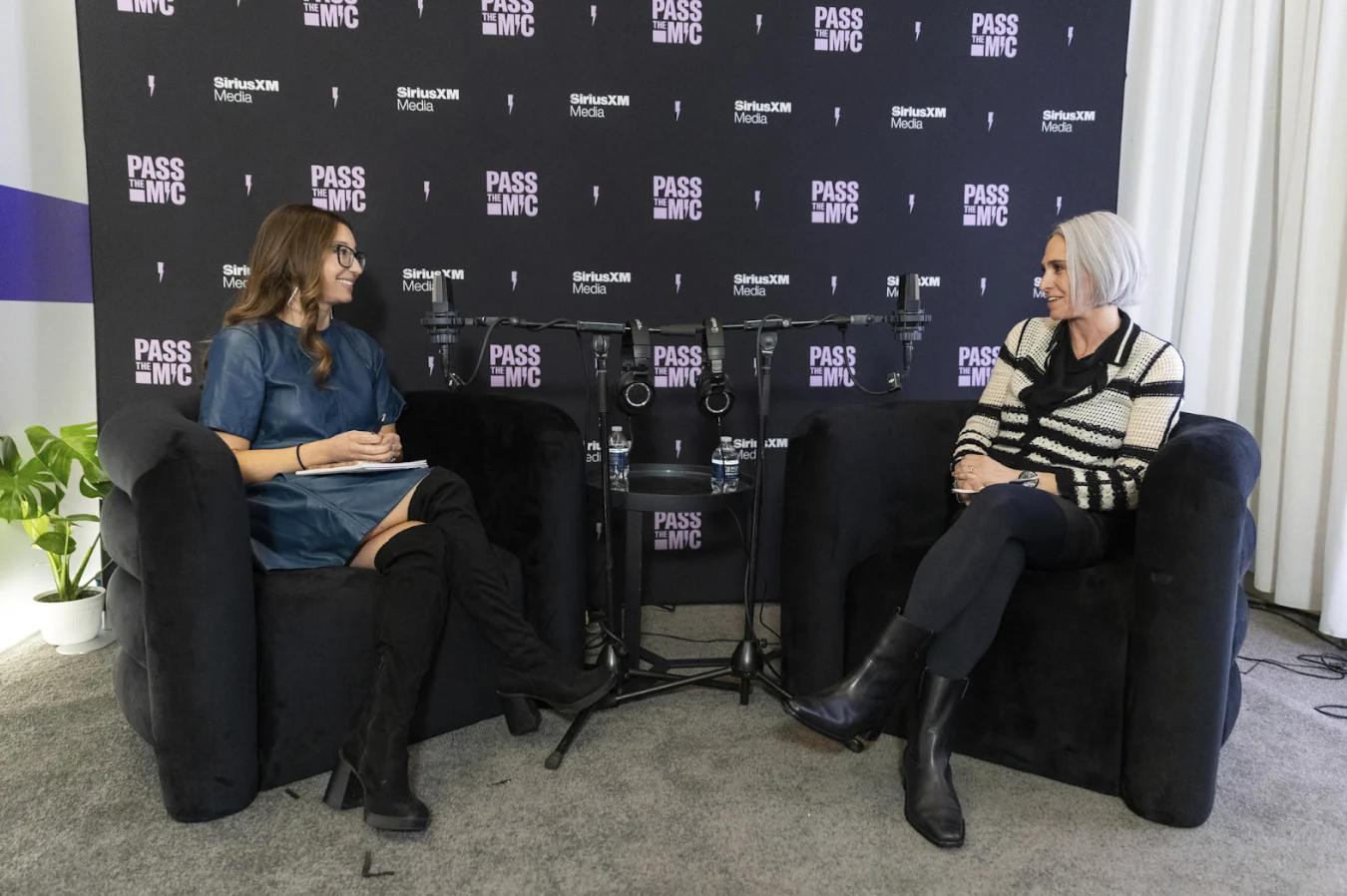
That human level of connection is exactly what we dove into during our time in the Pass the Mic booth at CES. Jocelyn Hudak, Senior Director of Content and Digital Marketing, sat down with some of the leading women driving the industry. Together, they discussed what connection means, not just in theory, but in practice every day—as marketers, leaders, moms, and everything in between.
CES 2026 made one thing clear: the future of audio advertising is built on connection—across technology, data, culture, and real human experiences. From smarter in-car listening and stronger measurement to privacy-forward identity and actionable intelligence, we’re not just adapting to what’s next. We’re building it.
If you’re ready to create more meaningful connections with your audience—and turn them into measurable impact—let’s talk.
Want to discover more of our events?



Related Insights
 Streaming
Reasons Streaming Audio Ads Are Better than Radio Ads
Sep 15, 2026 Podcasts
Big Wigs, Bigger Fandom: Meet The Bald and the Beautiful
Sep 15, 2026 Digital Audio
Audio Advertising 101: Audio Ads, from Music to Podcasts
Sep 11, 2026 Streaming
Holiday Marketing Ideas to Connect with Early Shoppers
Sep 10, 2026


