How Media Teams Integrate Audio Ads into Campaign Workflows
Build a stronger cross-channel media strategy with audio advertising. Learn how to plan, activate, measure, and optimize audio alongside other digital channels.
Capturing consumer attention is harder than ever. Audiences are increasingly fragmented across countless platforms, apps, and devices, and screen fatigue is a challenge for visual-first campaigns to break through. When consumers are constantly bombarded by pop-ups, banners, and scrolling video feeds, traditional visual-first strategies often hit a wall of diminishing returns.
Digital audio provides a powerful solution to this problem, yet it remains significantly underutilized in the typical media mix. Americans spend over four hours a day with all audio, 1and 81% of the population 12+ listens to online audio monthly. 2Yet even with audio accounting for 21% of consumers’ total media time, it historically captures only 4% of media budgets. 3 Advertisers consistently focus heavily on visual formats, leaving a massive portion of consumer media time entirely untouched.
Unlocking that opportunity starts with how campaigns are planned. Effective media planning requires abandoning a siloed approach and integrating audio into the campaign workflow from the start. When you integrate audio into your campaign planning early, you build a cohesive strategy that connects with listeners and drives results across the entire marketing funnel.
How media planning teams incorporate audio advertising into campaign strategies
Brands can drive growth by making audio an active participant in their broader strategies. Relying solely on visual media leaves valuable moments with your target audience untouched. Meanwhile, audio extends your brand's reach into screen-free environments where visual ads simply cannot go.
Digital audio also proves highly effective across the entire marketing funnel. It builds strong top-of-funnel brand awareness by capturing listeners in highly engaged moments. At the same time, targeted audio ads can drive middle-of-funnel consideration and prompt bottom-of-funnel conversions.
To maximize this impact, media planners must build audio into their cross-channel media mixes right from the start. Combining audio with visual formats can extend reach and reinforce messaging across touchpoints. In fact, after analyzing 100+ campaigns, we discovered a delivery of +52% incremental reach when video and display ads were added to SiriusXM Media's audio-only campaigns. 4 Pairing these channels together ensures they work in harmony and complement one another rather than compete for the same user attention.
Where audio advertising fits within media planning workflows
Understanding the value of audio is one thing, but knowing exactly where it fits into your media planning workflows is another. Here is how top media teams can execute this integration.
Combine audio with video, social, and display
Audio naturally complements visual channels. A user might hear a compelling audio ad on a podcast during their morning commute and then see a related social media post during their lunch break. This cross-channel approach creates multiple touchpoints and builds stronger brand recognition by surrounding the consumer with consistent messaging throughout their day.
Leverage audio to fill gaps other channels leave behind
Visual campaigns can miss audiences when they’re away from their screens, multitasking, or skipping past ads. Audio advertising bridges these gaps by reaching highly engaged listeners in screen-free moments, whether they’re exercising or working. By adding audio to the mix, media teams can extend their message into moments when visual channels may not be able to reach consumers.
Use audio to reinforce messaging
Repetition builds recall, but repeating the exact same messaging and format can quickly cause ad fatigue. Audio offers a fresh way to amplify frequency while varying the creative experience. For instance, hearing a brand's message creates an entirely different sensory connection than reading it on a screen. By layering audio into your visual campaigns, you can reinforce your core messaging across different formats and create a more cohesive brand experience.
Activate audio through programmatic and direct
Media planners can execute audio buys through programmatic and direct buys depending on specific goals. Programmatic advertising automates the buying and placement process, giving teams the flexibility to make real-time adjustments and achieve scale efficiently. Conversely, direct advertising secures more control over premium, guaranteed placements, such as podcast sponsorships. But it’s not either-or, you can blend both approaches to maximize reach and brand impact.
How to align audio advertising with paid social, display, and video campaigns
Creating a cohesive campaign means synchronizing your efforts across all platforms. Here is how media teams can align audio with the rest of their digital media mix.
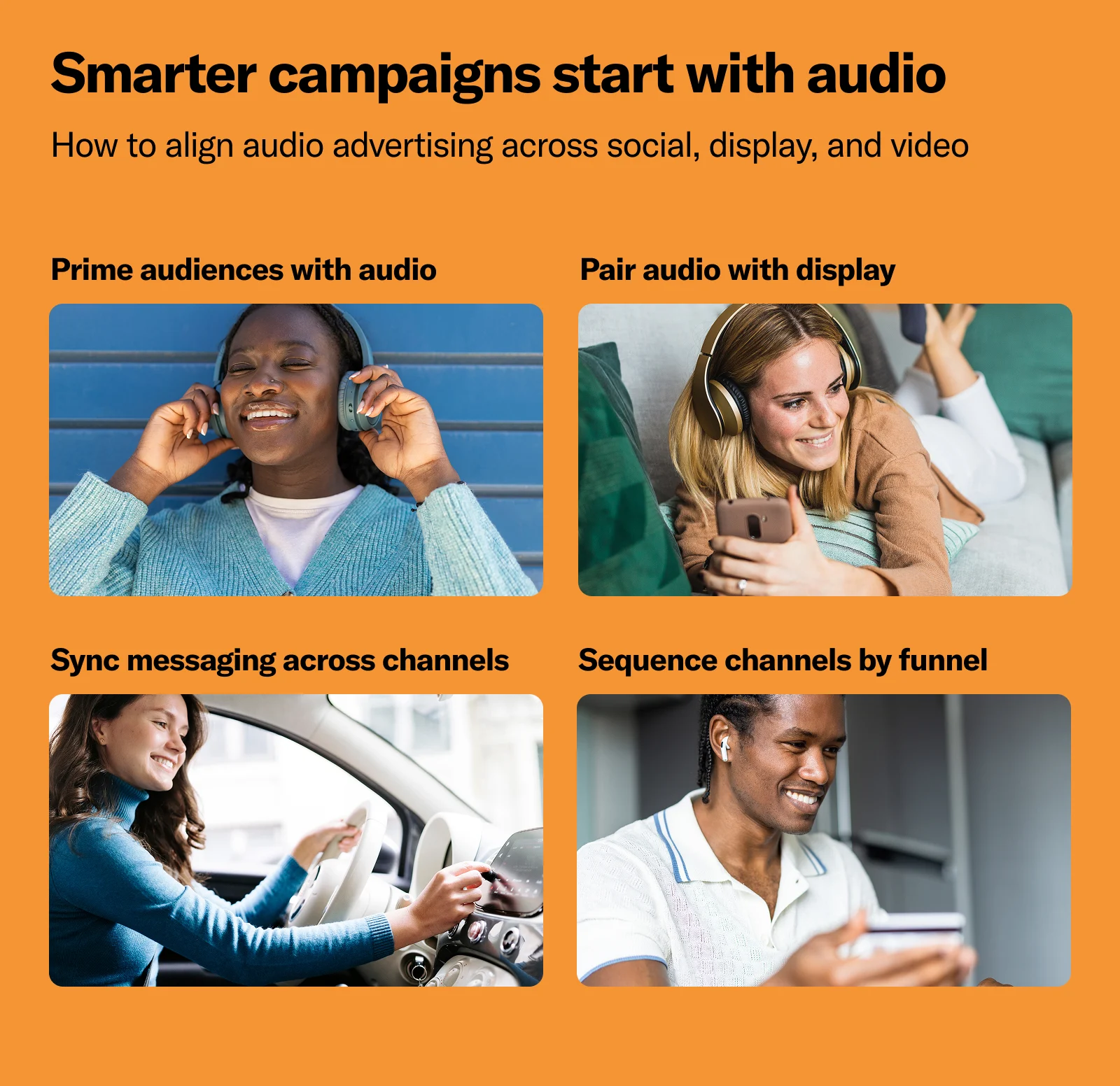
Prime audiences with audio
Audio can serve as an introduction to your brand. You can initially capture a listener's attention with a compelling audio ad, priming them for future interactions. Media teams can then follow up by retargeting those specific listeners with social or display ads. This strategy creates additional touchpoints with audiences and gives brands a second chance to move them toward action.
Pair audio with display
Pairing audio with display gives your message visual reinforcement. When listeners hear your message on an audio platform, a companion display ad can reinforce the message with visual branding and provide a clear, clickable path to action. On Pandora, display ads offer 100% share of screen, helping ensure your brand commands total visual attention without competing clutter. This one-two punch caters to both auditory and visual learners, strengthening brand recognition.
Sync messaging across channels
A disconnected campaign can confuse consumers and dilute your brand identity. Meanwhile, cross-channel campaigns work well when each touchpoint tells a consistent story. Your media planning team must ensure creative messaging remains synchronized across every single channel while adapting the creative to each format. For instance, if your audio ad promotes a specific seasonal sale, the subsequent display and video ads should feature the exact same branding, tone, and offer. This creates a more cohesive experience as consumers encounter the brand across channels. Consistent storytelling accelerates consumer trust and product recognition.
Drive action with audio
Audio isn’t limited to building awareness. With precise targeting, clear CTAs, and measurement capabilities, audio can also support lower-funnel goals like site visits, app activity, conversions, and sales. Media teams can use these capabilities to move listeners from exposure to action while measuring audio’s contribution to campaign performance.
Sequence channels by funnel
Media teams can sequence channels strategically based on their role in the customer journey. Audio, social, display, and video can each support different objectives across the funnel—from introducing a brand and building consideration to reinforcing messages and driving action. The key is coordinating channels so each touchpoint builds on the last, creating a connected path from awareness to conversion.
How media teams measure performance across integrated advertising campaigns
A connected media plan requires a holistic approach to measurement. Here’s how advertisers can track the impact of their integrated efforts and understand audio’s contribution to a broader campaign.
Track incremental reach
Measuring campaign performance starts with understanding who you are actually reaching. Teams should regularly track incremental reach to see how many additional consumers the audio ads reach beyond those already exposed to other channels in the campaign. Cross-platform planning tools can make that picture clearer. For example, SiriusXM Media’s integration with VideoAmp’s VXP™ allows advertisers to plan audio alongside video and CTV and quantify its incremental reach within the same environment.
Measure frequency and exposure
Understanding how often a user encounters your brand across different formats can help media teams manage frequency and exposure—and prevent ad fatigue. By looking at reach and frequency together, brands can assess whether audiences are receiving enough exposure to reinforce the campaign message without oversaturating them. Tools like VideoAmp’s VXP™ can also help advertisers evaluate reach, frequency, and audience overlap across audio, TV, and CTV, providing a more unified view of cross-channel exposure.
Use multi-touch attribution models
Consumers rarely buy a product immediately after hearing a single ad. They typically interact with multiple touchpoints—across weeks if not months—before taking action. Multi-touch attribution models help brands evaluate the role different touchpoints play along the path to conversion rather than assigning all the credit to a single interaction. For example, attribution data can help show how exposure to an audio ad contributes to a journey that later includes a search, site visit, or purchase.
For an even broader view, media mix models (MMMs) can help teams understand audio’s contribution alongside other channels. Through SiriusXM Media’s partnership with Innovid, advertisers can bring more granular audio data into MMMs, putting audio measurement on more consistent footing with channels like video and display and providing better visibility into its impact on overall performance.
Optimize based on real-time data
Integrated media plans shouldn’t remain static once a campaign launches. Digital advertising technology gives media teams access to performance data that can help inform ongoing optimization and monitor active performance. Depending on the campaign and buying method, brands can monitor factors like performance, audience segments, and then adjust targeting, creative, or spend based on the data. Think of this scenario—if a specific creative variation or targeted audience segment is underperforming, buyers can make more informed decisions about where the budgets can have the greatest impact.
Strengthen your media planning with SiriusXM Media
Audio is the missing piece in many modern marketing strategies. When you integrate digital audio early in your campaign planning and combine it with other media, you unlock new audiences, reinforce your creative messaging, and drive measurable performance across the entire funnel. Ready to elevate your integrated campaign strategy? Let's talk.
More audio advertising insights


Related Insights
 Targeting
Activity Targeting Gets Your Brand Messages in on the Action
Oct 15, 2026 Digital Audio
It's Not Too Late to Win New-to-Brand Holiday Buyers with Audio
Oct 15, 2026 Digital Audio
Why Fragmented Consumer Attention is Changing Media Buying
Oct 14, 2026 Success Stories
SiriusXM Drives Cross-Funnel Lifts for a Breakfast Brand
Oct 13, 2026
